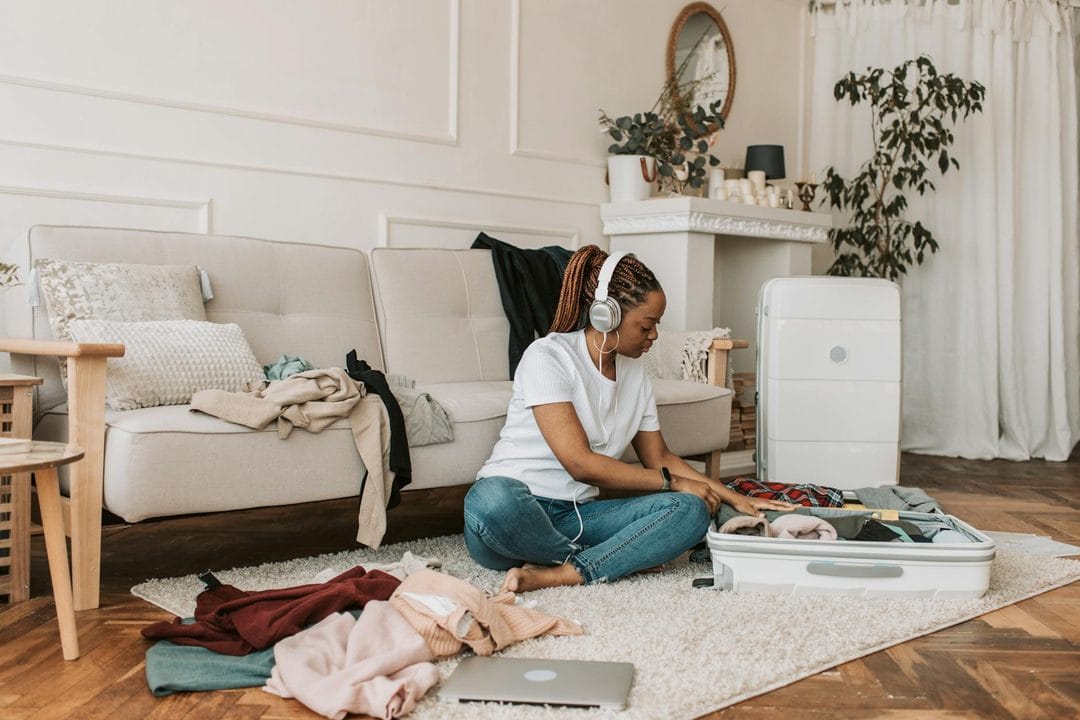
The first time I travelled for two weeks with only a cabin bag, it was not by choice — an airline had a reputation for charging more for checked luggage than for the flight itself, and I was stubborn. I came home a convert. Not because of the money, though that adds up, but because of what it does to the trip itself: no carousel, no lost bag in Lisbon while you are in Porto, no lugging a suitcase up four flights of stairs in a building that swore it had a lift. Travelling light is less about the packing and more about the freedom it quietly hands you. Here is the system that has survived real trips, including the ones in changeable weather.
The principle that makes it possible
You are not packing for two weeks. You are packing for about five to seven days and doing laundry once. That single reframe is the whole secret, and it is the one most people resist because it feels like cheating. It is not. Nobody on your trip is keeping a log of your outfits, and a sink wash or a one-hour laundrette stop on day six resets everything. Once you accept that you will wash clothes, the maths of the bag changes completely and the impossible becomes ordinary.
The second principle: everything must work with everything. A capsule that mixes — three or four bottoms, five or six tops, all in colours that go together, plus one layer and one thing you can dress up — gives you well over a dozen outfits from a dozen items. The moment you pack a top that only goes with one specific skirt, you have wasted space on a single outfit. Be ruthless about that.
The two-week capsule, roughly
- Four to five tops, in a shared palette, mixing one or two you could wear out in the evening.
- Three bottoms — say a pair of jeans, lighter trousers, and one skirt or shorts depending on climate.
- One dress that packs flat and can go from day to dinner.
- One warm layer and one weatherproof layer — these go on the plane, not in the bag.
- Underwear and socks for about seven days; these are tiny and the one thing worth slightly overpacking.
- Two pairs of shoes maximum, one of them on your feet. A comfortable walking pair and one that works for evening is plenty.
Shoes are the great bag-killers — bulky, heavy, awkwardly shaped — which is why the discipline of two pairs matters more than any other single rule.
Toiletries: where the bag is really won or lost
The liquids limit is the constraint that trips people up, and the answer is not to pack tiny bottles of everything but to need fewer liquids. Solid shampoo and conditioner bars do not count against the liquids allowance at all, last for many trips, and cannot leak over your clothes at altitude. A solid moisturiser, a bar of soap, a toothpaste tablet — between them they free up most of your liquids bag. What is left, decant into small reusable bottles rather than buying travel minis you will throw away.
And here is a small rebellion against the packing-list industry: you do not need most of what the lists tell you to bring. Hotels and rentals have soap and often shampoo. You can buy sunscreen and shower gel at any supermarket in any country, usually cheaper than at home, and it is a small pleasure to use the local stuff. Pack the things that are genuinely hard to replace — your specific medication, your contact lenses, the one skincare item your face will riot without — and trust that the rest exists at your destination, because it does.
The packing method itself
Rolling versus folding is a debate people get strangely passionate about; the truth is that rolling saves a little space and prevents some creases in soft items, while structured pieces fold better. What actually transforms a cabin bag is compression packing cubes — they let you squeeze the air out of clothes and, just as usefully, keep the bag organised so you are not excavating everything to find one shirt at a hostel. One cube for tops, one for bottoms, one for underwear and socks, and the bag stays sane for the whole trip.
Wear your bulkiest items onto the plane. The coat, the boots, the chunky jumper — they take up a third of the bag and weigh nothing on your body. Yes, you look slightly overdressed walking through a warm terminal. It is a fair price for the space, and you will be grateful for the layers on a cold aircraft anyway.
The counterpoint: when checking a bag is the right call
I am not a purist about this, and the people who turn carry-on-only into a competitive sport have lost the plot. There are trips where checking a bag is simply the sensible choice. A skiing holiday with its mountain of gear. A trip where you are bringing gifts, or coming back with them. A long stay where you genuinely live out of the bag rather than tour. Travelling with a baby, when the equipment alone fills a hold. The goal is a trip that serves you, not a bag that wins an internet argument. Carry-on is a tool, not a virtue.
For the ordinary two-week trip, though — city and coast, a wedding here, some walking there — the cabin bag is not a sacrifice. It is the version of travel where you walk off the plane and straight out of the airport, where you can take the cheap regional train instead of the taxi because you are not wrestling a suitcase, where moving between three places in a fortnight is light and easy instead of a recurring ordeal. You pack less and, somehow, the trip gets bigger. Try it once on a trip you would normally overpack for. You will understand the conversion the moment you stride past the baggage carousel and out into the afternoon while everyone else is still waiting.