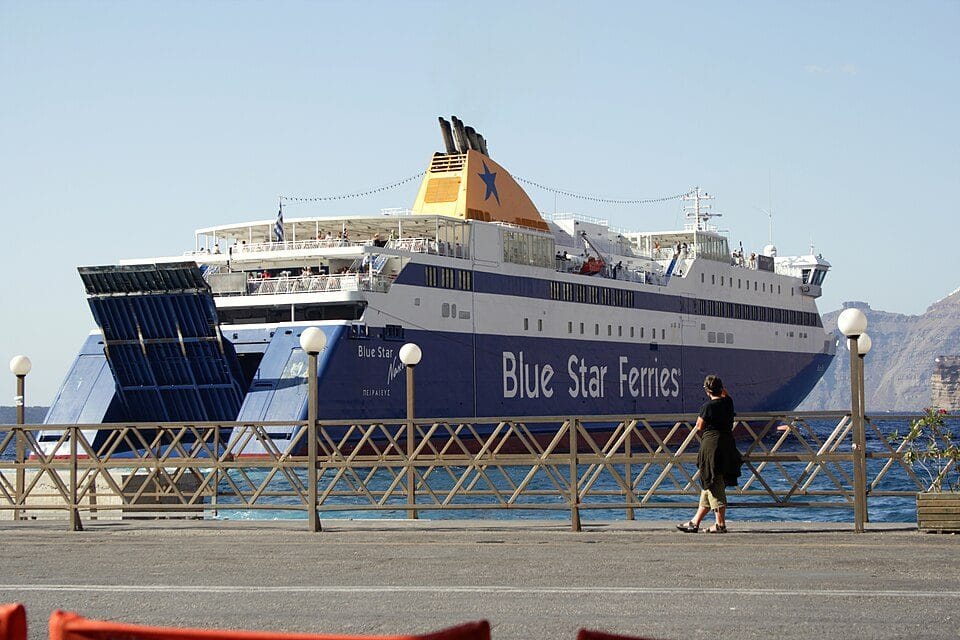
The ferry to Naxos was supposed to leave Piraeus at 7:35pm and dock by half past midnight, but it pulled out of the harbour closer to 9:10, well after most of the day's crowd had already boarded and settled onto the open deck. By the time the gangway finally dropped on Naxos, most of the taxi drivers who wait dockside for late arrivals had already gone home for the night, and the handful of restaurants near the port had switched off their outdoor lights. That gap between the printed departure time and what actually happens is the detail every glossy island-hopping itinerary leaves out. Greek and Croatian ferries run on a schedule that bends whenever the wind, the crew rotation, or the previous port's turnaround time feels like it, and delays of thirty to ninety minutes are closer to normal than exceptional in July and August. If you're travelling with a partner or a group, a late arrival is an inconvenience you can laugh about over a late dinner. If you're travelling alone, that same delay decides whether you're walking into a lit, familiar guesthouse or standing on an empty dock trying to work out who to call.
Island hopping by boat has become the default way to string together a summer trip across the Cyclades or the Dalmatian coast, and for good reason — it's cheaper than flying between islands and it puts you on deck watching the coastline instead of sitting in a departure lounge. The practical mechanics of doing it solo — the parts involving ticket categories, luggage, and arriving somewhere unfamiliar after dark — get skipped over in almost every guide written with couples or groups in mind. Here's what actually matters once you're the only one making the decisions.
Ferries Beat Flights, But Not for the Reason You'd Think
A one-way flight from Athens to Santorini on Aegean Airlines runs somewhere between €70 and €140 depending on the season, and that's before adding the taxi to the airport, the baggage fee, and the hour you'll spend clearing security for a 40-minute flight. A ferry ticket from Piraeus to Santorini on Blue Star Ferries costs closer to €45–65 for a standard seat, and you walk on board with your bag fifteen minutes before departure. The saving isn't dramatic on a single route, but string together four or five islands over two weeks and the difference adds up to €150–250 across a trip — roughly what a decent afternoon of shopping in Chania's old town would otherwise cost you. And unlike a regional airport, Piraeus doesn't charge extra for a second checked bag or make you weigh a daypack at the gate. The real advantage isn't the price, though. It's the routing.
Ferries connect islands directly, so you're not routing every hop back through Athens the way flights often force you to. Paros to Naxos is a 55-minute island-hopper you can book the morning of; the equivalent by plane doesn't exist. That single fact reshapes how you build an itinerary — you stop planning around a hub-and-spoke flight map and start planning around whichever islands actually interest you.
The Fast Ferry Trap
Every booking app pushes the SeaJets or Hellenic Seaways high-speed catamarans to the top of the results, because they're faster and most search tools sort by duration first. A catamaran from Piraeus to Paros takes about 3 hours 40 minutes versus five-plus hours on a conventional Blue Star ferry, and for a first-timer scanning prices, that looks like the obvious choice.
It isn't, not automatically. High-speed catamarans are far more likely to cancel once the meltemi picks up — the strong, dry northerly wind that hits the Cyclades hard from July through September — because their shallow hulls handle chop badly. The older, slower conventional ferries, the Blue Star and Hellenic Seaways car ferries with deeper hulls, keep running in conditions that ground the catamarans entirely. Book the fast option and you're gambling on the wind forecast; book the slower ferry during a windy week and you actually arrive on the day you planned.
If the forecast shows wind above a 6 on the Beaufort scale for your travel dates — check Windy.com or the Greek National Meteorological Service two days out — switch to the conventional ferry even if it costs an extra hour on paper. A cancelled catamaran ticket gets refunded automatically, but it also strands you in port rebooking for the next available sailing, and during peak August that can mean a two-day wait if the alternative boats are already full.
Booking Timing, and the List Worth Following
Ferryhopper and Direct Ferries are the two booking platforms that show live availability across operators rather than just one company's own site, and both issue a mobile ticket without needing a printer anywhere near the port. For July and August sailings between the major Cycladic islands, book at least ten days ahead; smaller, less-touristed routes like Sifnos to Folegandros can often still be booked the same morning without trouble. A few things are worth doing before you actually buy the ticket:
- Compare the departure gate carefully. Piraeus has multiple numbered gates spread across a genuinely large port, and being at the wrong one when boarding starts is a stressful way to begin a trip.
- Choose an actual seat category, not just "deck class," for any sailing over three hours — deck class on a hot August afternoon usually means sitting on the floor next to your luggage.
- Screenshot the ticket QR code before boarding, because port wifi is unreliable and some smaller islands still have no signal at all near the dock.
- Cabin bookings on overnight routes, Piraeus to Crete for instance, sell out roughly two weeks ahead in peak season, and a shared four-berth cabin runs about €25–35 more than a reclining seat.
Not every route needs this much advance planning — the short island-to-island hops rarely sell out — but anything touching Piraeus in summer does.
Arriving Alone After Dark
The dock is often the loneliest fifteen minutes of the whole trip.
Small islands typically have exactly one taxi rank, and if two ferries dock within twenty minutes of each other, that rank empties fast. Santorini's port, at the bottom of a steep cliff road, has a bus that syncs loosely with ferry arrivals — loosely being the operative word, since the last bus up to Fira has been known to leave before a delayed ferry has even finished tying up. On the smaller islands, Beat and FREENOW rideshare apps don't operate at all, which leaves calling a taxi number posted somewhere near the terminal, or asking dock staff directly, as the only real fallback. Ask a crew member as you disembark whether the scheduled bus or taxi service is still running that night; they know the local operators far better than any app does, and most are used to solo travellers asking. Message your accommodation host the actual arrival time once you're at sea and have signal, not the scheduled one — most island guesthouses in the Cyclades are used to erratic ferry timing and will send someone to meet a late boat if you ask by early evening, and it costs nothing extra. Keeping a paper photocopy of your accommodation address and the host's phone number in an easily reachable pocket saves precious minutes when your phone battery is down to four percent after a long day of travel.
This works well on the Cyclades, where guesthouses expect the schedule to slip. It works far less reliably on the Dalmatian coast, where Croatian Jadrolinija ferries between Split and Hvar run tighter, more predictable schedules — but a missed connection there usually just means an unplanned night in Split rather than a genuinely stranded arrival on a dark, empty dock, which is its own kind of inconvenient in a different way.
Luggage and What Actually Fits
Deck class doesn't include anywhere to store a large suitcase, which is the detail that catches people who've only ever flown carry-on before. On the bigger conventional ferries there's an unsecured luggage rack near the entrance, and on the fast catamarans there's often nothing beyond wedging a bag under a seat or leaving it in an open pile near the doors.
A 40–45 litre backpack works better than a wheeled suitcase for exactly this reason — it stays with you, on your lap or between your feet, instead of sitting exposed near the entrance for a four-hour crossing. If you're travelling with a hard-shell case because you need it for flights on either end of the trip, keep it in view and treat the gap between gangway and seat as the one moment worth paying attention to. Theft on Greek ferries isn't common, but it isn't unheard of either, particularly on the busiest Mykonos and Santorini routes during August.
The Route That Actually Works for a First Solo Hop
Skip the ambitious six-island itinerary for a first attempt. Piraeus to Naxos, three or four nights, then Naxos to Paros for two more, covers enough ground to learn the rhythm of ferry travel without the daily stress of transfers and rebookings. Naxos has a proper walkable old town, beaches a short bus ride out, and an onward connection to Paros that runs multiple times a day even in shoulder season, so a missed morning boat doesn't wreck the rest of the schedule.
Santorini and Mykonos are worth seeing eventually, but neither is a forgiving place to practise solo ferry logistics for the first time — both islands run at a pace and price point built for short, high-turnover visits, and the ports get genuinely chaotic through peak August. Start smaller, get the ferry rhythm figured out somewhere with fewer crowds, and add the famous islands once arriving alone after dark stops feeling like the hardest part of the day.