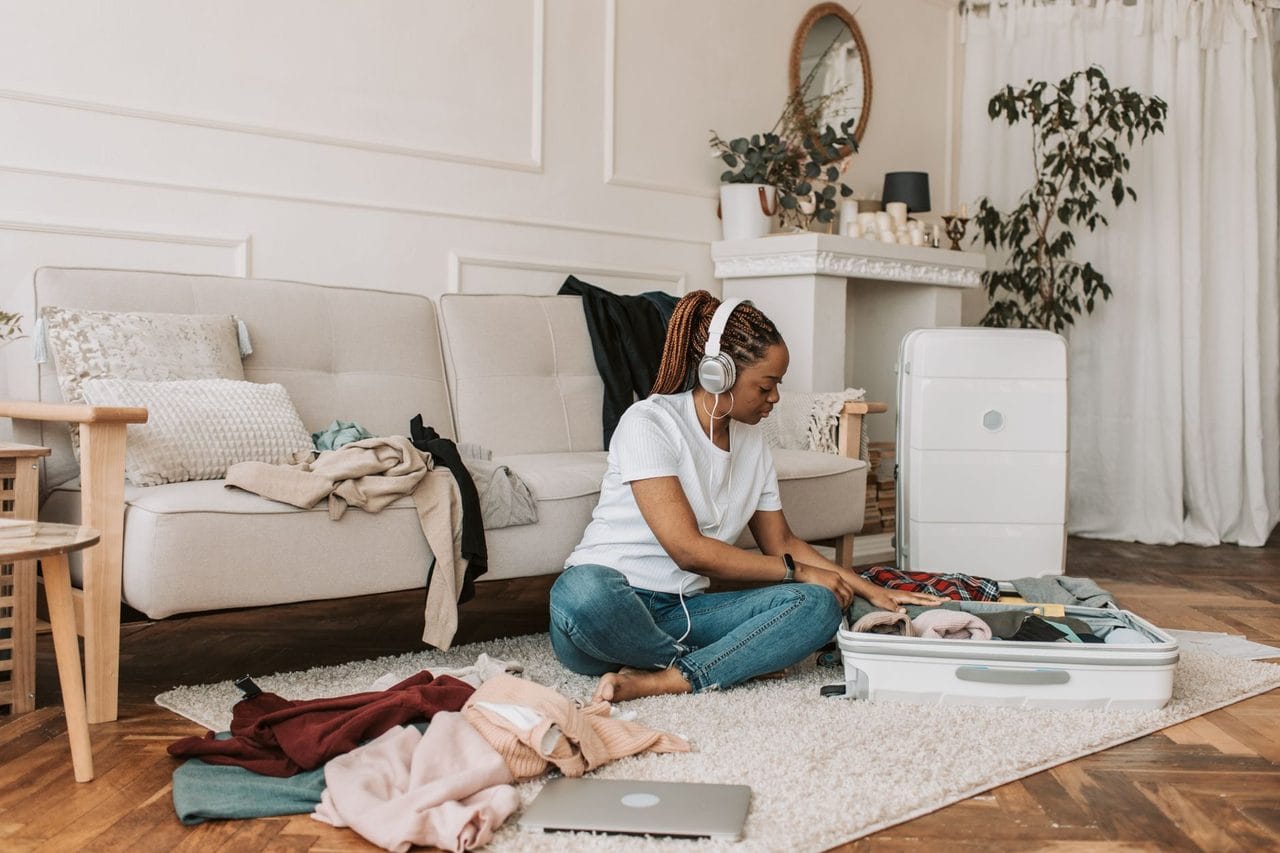
The first time I did two weeks in Portugal with only a cabin bag, I packed it the night before, sat on it to close the zip, and spent the whole flight convinced I'd forgotten something vital. I hadn't. What I'd actually forgotten was how little a person genuinely wears on holiday — the same three or four outfits on rotation, plus the one nice thing for dinner. That trip rewired how I pack, and I've not checked a bag for a summer trip since. Below is the system, the airline rules that catch people out, and the honest list of what you can leave at home without regret.
What the airlines actually measure
Here's the part most packing guides skip: the headline "cabin bag allowance" and the bag that fits free under the seat are usually two different things, and the cheap fares only include the small one. On Ryanair, the free personal item is 40 x 20 x 25 cm — roughly a small backpack — and anything bigger needs a Priority fare or a separate fee. easyJet is more generous with its free under-seat item at 45 x 36 x 20 cm, and a larger 56 x 45 x 25 cm cabin bag comes with a "Large cabin bag" add-on or an Up Front/Plus seat. Wizz Air's free bag is 40 x 30 x 20 cm. The numbers feel pedantic until you're at the gate watching someone repack on the floor while the queue tuts behind them.
The depth is the dimension that gets people. A bag can look gate-legal head-on and still be 28 cm deep once it's stuffed, and the sizers at the gate are unforgiving — they're a metal box, not a person you can reason with. Measure your packed bag, not your empty one, and measure it bulging. If you're flying two different airlines on one trip, pack to the strictest of the two. And weigh it at home: several carriers cap cabin bags around 10 kg, and a wheelie case full of toiletries hits that faster than you'd think.
The capsule that mixes and matches
The whole trick is colour discipline. Pick one neutral base — navy, black, or stone — and one or two accent colours that all work with it, so every top goes with every bottom. Once your palette is settled, the actual count for two weeks of summer is smaller than it sounds, because you're going to do laundry once (more on that below). My working list, and I've tested it across hot cities and beach towns:
- Five tops — a mix of two vests, two T-shirts, and one that's nice enough for dinner
- Three bottoms: one pair of shorts, one linen trousers, one skirt or a second pair of shorts depending on the trip
- One dress that can go from beach to restaurant with a change of shoes
- A light layer — a denim shirt or a cardigan — because air-conditioned trains and evening sea breezes are colder than the forecast suggests
- Swimwear: two sets, so one can dry while you wear the other
- Underwear and socks for seven days, not fourteen
Two pairs of shoes total, and one of them stays on your feet for the flight. I travel in trainers or walking sandals and pack one dressier flat sandal that folds reasonably flat. Three pairs is the line most people cross without noticing — heels you won't wear, a "just in case" pair, the spare trainers. Leave them. Shoes are the single heaviest, bulkiest thing in any case, and the third pair is almost always the one you bring home unworn.
Packing cubes are the difference between a tidy bag and a jumble you'll be digging through for a fortnight. I use a set of three compression cubes — typically a large at around 35 x 25 cm, a medium, and a small — and roll soft items rather than fold them. Rolling isn't a myth; it genuinely fits more T-shirts into the same cube than folding, and it creases linen less than you'd expect. Put the heaviest cube (jeans, trousers) at the wheel end of the case so the weight sits low, and use the small cube for chargers and cables so they're not a tangle at the bottom. One cube stays empty-ish on the way out — that's your dirty-laundry cube, and it keeps worn clothes away from clean ones.
The 100 ml rule, and the part that's quietly changing
The classic rule still applies at most airports: liquids in containers of 100 ml or less, all fitting inside one transparent resealable bag of roughly one litre, one bag per person, out of your case and into a tray at security. A few UK airports have installed newer CT scanners that lift the limit, but the rollout has been patchy and rules have flip-flopped, so the safe assumption for summer 2026 is still the 100 ml bag everywhere. Pack as if the old rule applies and you'll never be caught out; assume the new one and you might be the person binning a full-size sun cream at Stansted.
The 100 ml limit is about container size, not how much is left in it — a half-empty 200 ml bottle still gets confiscated, which catches people out every single summer. The fix is to decant. Buy a set of small refillable silicone bottles (50–100 ml) and fill them with the products you actually use, and switch what you can to solids: a shampoo bar and a solid conditioner skip the liquids bag entirely, as does a stick sunscreen and a bar of soap. Suncream is the one I'd buy at the destination rather than fight into the bag — a 200 ml bottle eats half your liquids allowance, and a supermarket in Spain or Greece sells it for less than the airport anyway.
Laundry on the road, the easy way
This is the bit that makes two weeks in one cabin bag genuinely comfortable rather than a feat of endurance. You are not packing fourteen days of clothes; you are packing seven and washing once. The simplest version needs nothing but the sink: a small tube of travel detergent or even a bar of laundry soap, a universal rubber sink plug (many hotel and Airbnb sinks won't hold water without one), and a bit of patience in the evening. Wash your smalls and a top or two, wring them in a rolled towel to get most of the water out, and hang them overnight.
The thing nobody mentions: a length of paracord or a proper travel washing line with hooks at both ends is worth more than any gadget, because the drying — not the washing — is the slow part. In humid coastal heat, cotton can take a full day to dry, while merino and quick-dry synthetics are touch-dry by morning, which is why a couple of technical tops earn their place even if they're not your favourite things to wear. If you're somewhere for three or four nights, a self-service launderette costs a few euros and does the lot in an hour, and it's the better option once you've more than a sink's worth. Either way, that single mid-trip wash is what shrinks fourteen days down to a seven-day packing list.
The things people always over-pack
After enough trips you start to recognise the items that come home unworn, unopened, or barely touched. Books are the classic — the hardback you were "definitely going to read by the pool" weighs as much as two pairs of shoes; bring a Kindle or read on your phone. "Just in case" outfits are the next offender: the smart blazer for a dinner that never gets booked, the second swimsuit beyond the two you'll actually rotate, the going-out top for a night out you already know you won't have.
Then there's the toiletry overpack. You do not need full-size everything for two weeks — you need enough to last until you can buy more, which in any European town is the same day you run out. Hairdryers live in almost every hotel room; leave yours. A first-aid kit can shrink to a few plasters, painkillers, and any prescription medication — the rest is sold in pharmacies everywhere, often without the prescription you'd need at home. Beach towels are bulky and slow to dry; a microfibre travel towel packs to the size of a paperback. And the genuinely surprising one is electronics: most people pack three chargers and a tangle of cables for devices that all charge over the same USB-C now, so one multi-port plug and two cables usually covers the lot.
None of this is about suffering for a small bag. The small bag turns out to be the more pleasant way to travel — no carousel wait, no lost-luggage panic, no lugging 23 kg up four flights to a room with no lift. You walk off the plane and you're simply there. Pack the navy, wash the smalls on Tuesday, buy the sun cream when you land.