I already picked my flight for late July, and it isn't landing anywhere near a beach umbrella. Barcelona hit 41°C on July 2 this year. Palma spent nine straight days above 37°C the same week. Athens issued its fourth heat-health warning of the month before June had even ended. None of that reads like a freak accident anymore. This year Spain's AEMET weather agency confirmed the country's hottest June on record, stacked on top of a pattern that's held since 2022. So I stopped treating a scorching Mediterranean summer as something to survive, and started treating it as a reason to go somewhere else entirely — somewhere the evening air still asks for a light jacket in July.
That's the shift this piece is actually about, and it's a different one from my last post here. I already covered how to survive a heatwave in southern Europe if you're already booked and committed. This time the argument is the destination swap itself: skip the south, go north, and land somewhere the temperature actually matches what you'd enjoy wearing outside.
The Numbers That Made the Decision For Me
Here's the part nobody puts in the brochure.
While Seville was forecasting 43°C highs for the second week of July, Bergen sat at a steady 19°C with overcast mornings that cleared by noon. Stockholm's July average tops out around 22°C, and Edinburgh rarely breaks 20°C even on its warmest afternoon. Tallinn's Old Town in July sits comfortably in the high teens once the sun drops. These aren't isolated cool pockets tucked away somewhere obscure — they're the standing summer climate of an entire region during the exact weeks the Mediterranean turns punishing.
Price backs up the swap too, not just comfort. A one-way Ryanair fare from London Stansted to Tallinn in the third week of July priced at £54 last time I checked, against £189 for the equivalent seasonal fare to Palma. Hotel rates follow the same pattern: a mid-range room in Riga's Art Nouveau district runs roughly €70-90 a night in July, while a comparable room in Dubrovnik's old town clears €220 during peak season. Book the north and you're not just avoiding a heatwave. You're paying less for the privilege.
Where to Actually Point the Compass
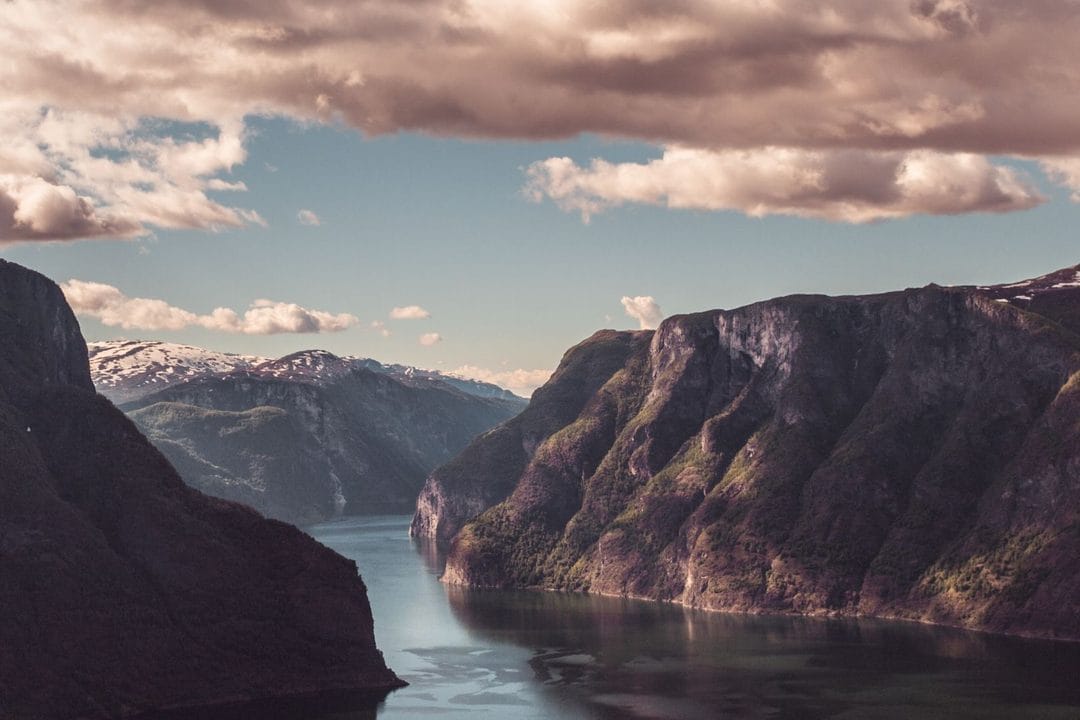
Three regions do the job well, and each one solves a slightly different version of the same problem. The Baltic capitals — Tallinn, Riga, Vilnius — give you walkable medieval cores, July highs around 20-23°C, and a fraction of the tourist density you'd hit in Rome; Vilnius in particular still feels like a city locals haven't ceded to visitors yet. Norway's western fjord coast, running from Bergen up through Ålesund to Stavanger, trades city density for scenery that does the heavy lifting on its own, and the Bergen Card at 425 NOK for 24 hours covers transit plus most museum entries. Scotland's coast is the wildcard pick: Oban, the Isle of Skye, and the East Neuk fishing villages in Fife deliver genuine solitude even in high season, provided you accept that a waterproof jacket is not optional gear but a daily uniform. None of these three destinations require a connecting flight through a Mediterranean hub, and that alone saves most travelers a wasted afternoon in an airport lounge.
Don't overthink the choice between them.
If you want walkable streets and cheap flights, book the Baltics. If you want landscape that makes you forget your phone has a camera, book Norway. Skip Scotland only if you truly cannot tolerate rain on four days out of seven, because that's the actual trade you're making, not some remote possibility buried in the small print.
Getting There Without Adding a Layover You Don't Need
Direct routes into this region have multiplied since 2023, and budget carriers now treat Baltic and Scandinavian capitals the way they used to treat Mediterranean charter destinations. Wizz Air flies direct into Vilnius and Riga from a dozen UK and Irish airports. Norwegian Air connects Gatwick to Bergen and Stavanger without an Oslo layover on most summer schedules, and Loganair runs direct routes from several English regional airports straight to Inverness for the Scottish leg. For anyone already on the continent, rail closes the gap even faster: the Berlin-Malmö overnight sleeper reintroduced by Snälltaget in 2023 puts you into southern Sweden by breakfast, and from there the X2000 express to Stockholm takes just under five hours.
Once you're on the ground, skip renting a car for the Baltic leg. Tallinn, Riga, and Vilnius are all compact enough to walk, and Bolt taxis cost a fraction of what car hire plus parking would run you across three countries. Norway is the opposite case, and budgeting for a car or the coastal Hurtigruten ferry route matters here, because the fjord towns are strung out along roads that public transit only serves a handful of times a day.
Packing for 18-22°C Instead of 38°C
Most people overpack for this trip out of pure heat-trauma reflex, throwing in sundresses they'll never wear because their brain still expects Mediterranean July. Layering matters more than volume here. A merino base layer, a mid-weight fleece or wool jumper, and a genuinely waterproof outer shell (check for a taped-seam label, not just "water-resistant" on the tag) will cover Bergen, Tallinn, and the Scottish coast equally well. Bring one pair of proper walking shoes with grip, because cobblestones in Riga's old town and wet rock on Skye punish sandals in two completely different ways, and neither ends well.
A few things surprised me on my own trial run last August, and none of them showed up in the packing lists I'd read beforehand:
- Evenings in Tallinn dropped to 12°C even mid-month, cold enough for gloves if you're sitting outside past 9pm.
- Sunset in Bergen in July doesn't happen until nearly 10:30pm, which resets your whole sense of when a day is supposed to end.
- Sun, hail, sun again — that was one single afternoon on Skye, and it's exactly why a packable jacket beats one you carry over your arm.
- I still packed shorts, wore them exactly once, on a day in Vilnius that hit 26°C. The region isn't uniformly cold; it just isn't Mediterranean-hot, and treating "the north" as one single climate is its own mistake.
The Trade-Off Nobody Mentions
None of this is a free upgrade. You give up the guaranteed sun that makes a Mediterranean holiday photo-ready, and you accept a real chance of three overcast days in a row, even in July, even in a good year. Lofoten and the more famous Norwegian fjord stops have gotten crowded enough in peak weeks that "escaping crowds" only holds true if you avoid the two or three towns every guidebook already flagged. Flights into smaller regional airports like Molde or Ålesund also thin out fast once school holidays start in late June, so the price advantage narrows if you book in July itself rather than locking it in back in April or May.
I'd still make the swap again. A week where the outdoor temperature matches what I'd actually enjoy wearing, somewhere I haven't already photographed from every angle, beats another week of timing every outdoor errand around a 4pm heat peak.
That's roughly the whole case, minus the part where you actually book the flight.