The Plan I Didn't Stick To
I'd booked four nights in Vienna with a fairly standard itinerary: the Kunsthistorisches Museum on day one, Schönbrunn on day two, a slow morning in a coffee house somewhere near the Ring on day three, and a day trip to Bratislava if the trains cooperated. None of that changed because Vienna disappointed me. It changed because the woman running my guesthouse mentioned, almost as an aside while I was checking in, that the vineyards on the northern edge of the city were "ausgesteckt" that week, and that the new wine had just started. I didn't know what either of those words meant, and she seemed slightly amused that I'd come to Vienna in late September without knowing. By the second evening I did know, the museums had been quietly pushed to a trip I haven't taken yet, and I'd spent an entire afternoon on a hillside bench I found entirely by accident. None of the guidebooks I'd read before landing had mentioned any of this, which in hindsight says more about which stories make it into guidebooks than about how central the wine season actually is to autumn in Vienna.
Late September and October are, by pure accident of timing, the best weeks of the year to be in Vienna if you like wine, hills, or the specific kind of quiet that comes from being somewhere locals go and tourists mostly don't. The city has more vineyards inside its own limits than almost any other European capital, and for about six weeks around harvest, the wine taverns scattered across the slopes above Grinzing, Nussdorf, and Neustift am Walde do something they don't do the rest of the year — they open in a rush, chasing the grapes, and then mostly close again until spring.
What You're Actually Looking For
The word for these places is Heuriger, which literally means "this year's" — as in this year's wine, still finishing its fermentation, that Viennese custom allows a tavern to sell under that name right up until 11 November, St Martin's Day. The tradition runs back to 1784, when Emperor Joseph II decreed that any vineyard owner could sell their own wine and food on their own property without a licence, and the culture around it has since been recognised by UNESCO as intangible cultural heritage, alongside Vienna's coffee houses and its sausage stands. A genuine one, technically called a Buschenschank, only serves wine and produce from its own land, only opens in specific outlying districts, and legally can't open at all in December or January.
You'll know one is open by the sign outside: a bundle of pine or fir branches, sometimes paired with a placard reading "Ausg'steckt," hanging over the door or gate. No branches, no wine that day. Genuine Buschenschanks are capped at four opening days a week outside their broader season, which means half the appeal of showing up is not knowing in advance exactly who'll be pouring until you're standing in front of the sign yourself.
Getting Out There Without a Car
None of this requires renting anything, which as a solo traveller matters more to me than it probably should. Tram 38 runs directly from Schottentor, on the Ring, out to Grinzing — the most touristed of the wine villages and, in my opinion, the one worth skipping on a weekend afternoon in favour of literally anywhere else on this list. Tram D goes to Nussdorf, terminating at Beethovengang, and from there a short uphill walk through the Nussberg vineyards passes three or four working taverns before you've broken a sweat. For Neustift am Walde, take the U4 to Heiligenstadt and pick up the 35A bus; for Stammersdorf, across the Danube and usually the quietest of the bunch, it's a tram-and-bus combination from Floridsdorf that takes closer to fifty minutes from the centre.
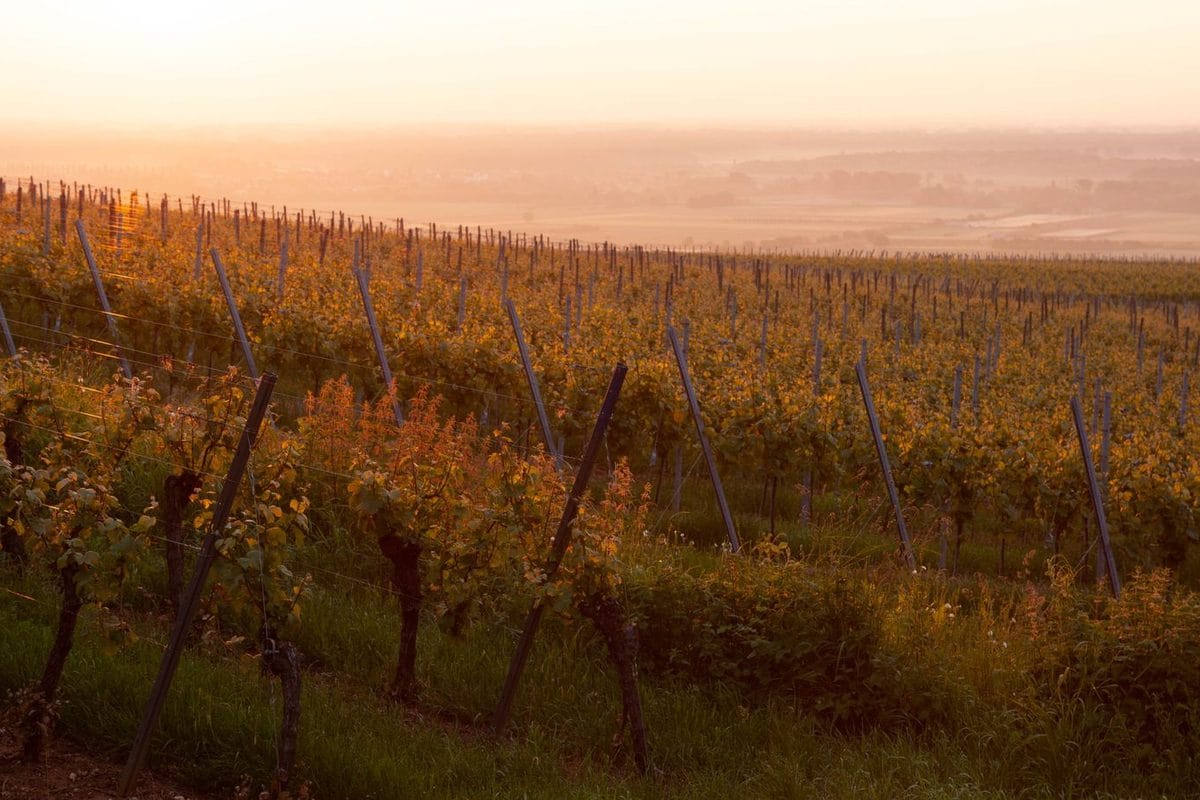
Nussdorf is the one I'd send a first-timer to, with a caveat: it's also the busiest, and on a clear Saturday the vineyard paths above Beethovengang fill with day-tripping groups by early afternoon. Go on a weekday, or go before eleven on a weekend, and you'll get the same view — Vienna spread out below the vines, the Danube a grey-green line through the middle of it — with a fraction of the crowd. I made the mistake of arriving at half two on a Sunday my first attempt and spent twenty minutes just finding a free bench.
Ordering Like You've Done This Before
The system varies slightly by venue, but the vineyard stands themselves are almost always self-service and cash-only, no cards and no exceptions, so pull euros out before you leave the tram stop rather than assuming you'll find a machine. You order wine and food at a counter or hatch, usually chalked up on a board in German, and carry it yourself to whichever bench or long table still has space. Sit-down Heurigen with proper dining rooms work a bit differently — Heuriger Kierlinger in Nussdorf and Mayer am Pfarrplatz in Grinzing are both good examples — where wine comes to your table but food is still a help-yourself buffet, so you build your own plate from cold cuts, spreads, and cheese, and whatever else is on offer that particular week. Expect Liptauer paprika cheese spread thick on dark bread, Grammelschmalz (rendered pork fat you spread like butter, better than it sounds), and occasionally Blunzen if you're feeling adventurous about blood sausage. Some of the larger taverns run a handful of warm dishes alongside the cold buffet, usually a Schnitzel or a pork knuckle, but the cold spread is the actual point of the meal, not a fallback. None of it moves fast, and nobody's in a rush to explain the system to a stranger either — you're expected to work it out by watching whichever table sat down before you did, and it stops feeling stressful faster than you'd think.
Order a Viertel, a quarter litre, rather than working through single glasses one at a time. It's the same wine, it costs less per pour, and it means you're not walking back to a self-service hatch every fifteen minutes, which matters more when you're carrying your own food and drink solo than it would with someone to hold the table. A buffet plate built for two runs somewhere around €15–25 at most of these places, which works out to under £11 (roughly $14) a head even at a fairly mediocre exchange rate — genuinely the cheapest good meal I had anywhere in Vienna that week.
Nobody warned me about the Sturm.
It's the fermenting grape must sold only during harvest season, cloudy and sweetish and deceptively easy to drink because it doesn't taste much like wine yet. It tastes like grape juice that's started to turn, with a kick that shows up about twenty minutes after you've decided it's basically non-alcoholic. Locals treat it as a seasonal event rather than an everyday drink, and there's a reason for that. Pace it the way you'd pace anything you can't quite gauge the strength of, and eat something substantial before a second glass rather than after.
Getting Back Without Overthinking It
This is the part that actually worried me before I went, and the part that turned out not to need worrying about. Austria consistently ranks among the safer countries in Europe for women travelling alone, and Vienna specifically runs one of the more reliable public transport systems I've used anywhere — the U-Bahn and trams keep to schedule, stations are camera-covered, and ordinary city habits cover almost everything worth thinking about. Keep your phone in a pocket rather than in your hand on a crowded U-Bahn platform, stay a normal level of alert around busy interchanges like Praterstern, where pickpocketing rather than anything more serious is the actual risk, and you're covering the same ground any Viennese woman would.
The specific worry with the wine villages is timing, not danger: the daytime tram 38 to Grinzing doesn't run all night, and if you've stayed out until the sky's gone properly dark over the vineyards, you don't want to be figuring out your route back in the moment. You don't have to. Wiener Linien runs a dedicated night bus, the N38, on that exact corridor between Schottentor and Grinzing, every single night of the week rather than only on weekends. Check the timetable before you head out so you know your last realistic departure, but don't build the whole evening around fear of missing it. I left Nussdorf past ten on a Tuesday once and had an entirely uneventful ride back into the centre — mostly empty tram, nothing to report, home before eleven.
Doing This Well, Not Just Doing It
A few things I'd tell anyone planning this as a solo trip rather than tagging it onto a group itinerary:
- Check whether your target tavern is actually "ausgesteckt" that week before making the trip out — most post current opening dates on a website or Instagram, and the smaller Buschenschanks genuinely do rotate on and off through the season rather than staying open continuously.
- Go on a weekday if your schedule allows it at all. The gap between a Tuesday afternoon and a Saturday afternoon in Nussdorf is close to the gap between two different destinations.
- Cash matters more here than almost anywhere else in the city. The vineyard stands won't take cards, and the nearest machine might be a fifteen-minute walk back toward the tram line, so bring more than you think you'll need.
- Layer up once the sun starts dropping, since the hillside taverns sit higher and more exposed than the city centre, and Vienna's September evenings can lose ten degrees between four o'clock and seven with very little warning.
- Pick one village and stay a few hours rather than trying to string three together in a day — Grinzing, Nussdorf, and Neustift am Walde aren't close enough to hop between comfortably, and the entire point of the afternoon is slowing down, not ticking off a checklist, whatever else you leave off this list.
What I keep coming back to, months later, isn't any single tavern, and I genuinely couldn't tell you the vintage I drank. It's the specific, ordinary strangeness of sitting alone on a bench cut into a hillside inside a European capital, watching a woman two tables over top up glasses for a table of six regulars who plainly do this every week, while the whole city sat quiet in the valley below, entirely unbothered by any of it. Vienna has the palaces and the opera and the museums, and they earn every bit of guidebook space they get. But the version of the city I'd actually go back for only exists for about six weeks a year, on a hill you need a tram, a bit of cash, and a small amount of nerve to reach on your own.