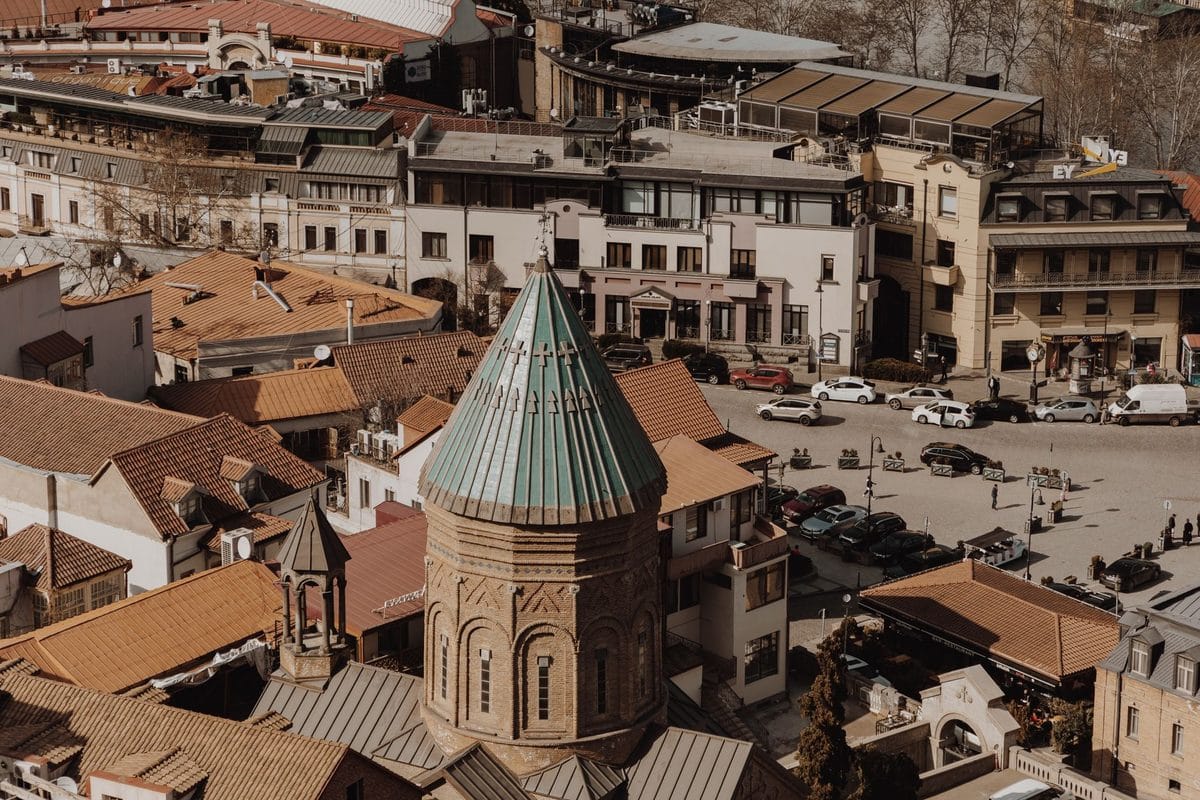
I landed in Tbilisi expecting a stopover city — somewhere you pass through on the way to the Caucasus mountains, not somewhere you linger. Four days later I'd extended my Airbnb twice, learned to pour wine from a clay vessel without spilling it, and started arguing with strangers about whether Georgian or Armenian khinkali dumplings are better (Georgian, obviously, and I will die on this hill). Nobody had warned me that Tbilisi is one of the easiest solo cities in Europe or Asia for a woman travelling alone — not because nothing ever happens, but because the city is small enough to learn in a day and the people are direct enough to tell you exactly what to avoid.
Why Tbilisi works for solo women
Georgia sits consistently in the safer half of global rankings for violent crime, and Tbilisi in particular feels less tense after dark than most capitals its size — Rustaveli Avenue and the Old Town stay lively with families and students until well past midnight, which matters more for a solo traveller's actual comfort than any statistic does. Citizens of the US, UK, EU, and Australia can enter visa-free for up to a year, which alone removes a layer of pre-trip admin that eats into planning time for destinations like India or China. I walked back to my guesthouse in Sololaki at 11pm on three separate nights and never once felt the low hum of unease I get in parts of Rome or Barcelona after dark.
That doesn't mean switch off entirely. Tbilisi drivers treat lanes as suggestions, and the biggest actual risk to a solo woman here is a bad taxi ride, not a bad encounter on foot. Use Bolt or Yandex Go rather than hailing a car on the street — both apps show the driver's plate and route before you get in, and a ride across the city centre runs 6 to 12 lari (roughly $2.20–$4.40), which is cheap enough that there's no reason to save the two dollars by flagging down an unmarked car. Solo women travelling here consistently report the same thing: the city rewards a bit of street smarts and punishes almost nothing else.
Where to base yourself
Skip the big hotel chains near Freedom Square and stay in Sololaki or Vera instead — both are five to fifteen minutes' walk from the Old Town, both are residential enough that you'll recognise your neighbours' dog by day three, and both are dramatically cheaper than the tourist-facing streets around Shardeni. A private room in a Sololaki guesthouse runs $18–35 a night; a dorm bed at Fabrika, the converted Soviet sewing factory turned hostel-and-courtyard-bar complex, is closer to $10–14 and doubles as the easiest place in the city to meet other solo travellers without trying.
Fabrika deserves its own mention, honestly — the courtyard runs a rotating lineup of small vendors, a natural wine bar, and a design shop selling actual Georgian ceramics rather than fridge-magnet tourist junk, and on a Thursday night it's packed with a mix of backpackers, local designers, and Tbilisi's small but loud expat crowd. If you want a home base with built-in social contact for your first night in a new country, this is it.
Old Tbilisi, on foot
The Old Town is compact enough to walk in half a day but layered enough to justify two. Start at Narikala Fortress — reachable by a short cable car from Rike Park (2.5 lari, tap card or coin) or a steep 20-minute climb if you'd rather skip the queue — for the view that makes sense of the whole city: the Kura River splitting the old brick rooftops from the Soviet-era apartment blocks climbing the far hills, the Mother of Georgia statue watching over both.
Below the fortress sits Abanotubani, the sulfur bath district, where domed brick bathhouses have been operating on the same natural hot springs since roughly the 5th century. Book a private room at Chreli-Abano or Royal Bath rather than the communal option if it's your first time — a private room with a masseuse runs 80–120 lari an hour and gives you full control over the experience, which matters when you're doing something this unfamiliar alone. I'll say it plainly: skip the communal baths on a first visit and don't let anyone talk you into "the authentic version" before you know what you're opting into.
From there it's a ten-minute walk to the Bridge of Peace, a glass-and-steel footbridge that looked genuinely jarring against the old stone city when it opened in 2010 and now just looks like Tbilisi refusing to sit still. Cross it into Rike Park at golden hour — the light hits the bridge's LED panels and the fortress walls at the same angle, and it's the one photo every visitor to this city ends up taking whether they planned to or not.
The wine culture is not a side note
Georgia claims the oldest continuous winemaking tradition on earth — archaeological evidence puts it at roughly 8,000 years, built around qvevri, the large clay vessels buried underground for fermentation, which UNESCO recognised as intangible cultural heritage in 2013. This isn't a marketing line the tourism board repeats; it shapes how the city actually drinks. Wine bars on Chardin Street and around Vino Underground pour by the glass from small producers you won't find exported anywhere, often for 8–15 lari a glass, and the staff will talk you through the difference between qvevri-aged amber wine and conventional European whites without a hint of condescension.
Book a day trip out to Kakheti, the wine region two hours east, if you have even one spare day — Sighnaki's hilltop old town and the Alaverdi Monastery's working vineyard are both reachable on a shared marshrutka minibus for under 15 lari each way, though a private group tour (40–60 lari, easily arranged through your guesthouse) gets you to three or four family wineries instead of one and includes lunch. Go for the wine, stay for the fact that Sighnaki's entire old town is a UNESCO-adjacent hill town wrapped in a 4-kilometre fortress wall that most visitors to Georgia never bother to see.
Day trips into the Caucasus
- Kazbegi (also called Stepantsminda) — a five-hour round trip on the Georgian Military Highway to the Gergeti Trinity Church, perched at 2,170 metres with Mount Kazbek behind it. Shared marshrutkas leave from Didube station for around 20 lari each way; a private driver for the day runs 250–350 lari split between up to four people.
- Davit Gareja monastery complex, carved into a desert cliff face right on the Azerbaijan border — stark, empty, and almost nothing like the rest of Georgia's green landscape.
- Mtskheta, the former capital just 25 minutes from Tbilisi by marshrutka (1 lari), home to Jvari Monastery and Svetitskhoveli Cathedral — doable as a half-day even if you're short on time.
- And if the mountains are your actual priority rather than an afternoon add-on, Svaneti in the far northwest is a different trip entirely — plan two full days minimum, because the drive alone takes most of one.
The Georgian Military Highway to Kazbegi gets genuinely white-knuckle in a shared minibus — narrow switchbacks, drivers who've done the route a thousand times and drive like it — so if car sickness or anxious mountain roads are a real concern for you, pay the extra for a private driver who'll actually stop for photos instead of racing to make a return-trip schedule.
What it actually costs
Tbilisi remains one of the cheapest capital cities in Europe or Asia to travel solo, and the gap between "backpacker" and "comfortable" budgets here is smaller than almost anywhere else I've been.
- Dorm bed: $10–15 a night; private guesthouse room: $18–35
- Khinkali (soup dumplings), the actual local obsession: 1.5–2.5 lari each, and you order by the count, not the plate
- Sit-down dinner with wine: 25–40 lari ($9–15) at a mid-range Old Town restaurant
- Metro ride: 1 lari flat fare, tap card required (buy a Metromoney card at any station kiosk for 2 lari)
- Cable car to Narikala: 2.5 lari one-way
Card payments work almost everywhere in central Tbilisi now, but carry 50–100 lari in cash for marshrutkas, small guesthouses, and the sulfur baths, which still run cash-only in a lot of cases. ATMs are everywhere and the lari-to-dollar rate barely moves, so there's little reason to exchange cash before you land — do it at the airport or a bank branch in town instead of a street exchange booth.
Cafe culture, and the one thing nobody tells you about it
Vera and Vake, the two neighbourhoods just west of the centre, run a genuinely excellent third-wave coffee scene — Coffee Lab, Ori Ori, and Stamba's lobby cafe are all easy places to sit alone with a laptop for three hours and never feel like you're taking up space you shouldn't. Georgian coffee culture leans slow rather than grab-and-go, which suits solo travel days when you want somewhere to plan the next 24 hours without rushing.
Here's the part that actually surprised me: table service in Georgia runs on genuine hospitality customs that predate tourism, meaning a waiter refilling your glass or a shopkeeper insisting you try a third cheese sample isn't an upsell — it's just how people here treat guests, full stop, and declining it too abruptly can read as rude rather than boundaried. Learn to say "diakh, gmadlobt" (yes, thank you) and "ara, gmadlobt" (no, thank you) early, because you'll use both constantly.
Safety notes worth taking seriously
The genuine risk in Tbilisi isn't street crime — it's the roads. Georgian driving is aggressive by Western European standards, crosswalks are treated as decorative, and the taxi apps exist specifically to remove the guesswork of price and route from a system that would otherwise leave you negotiating in a language you likely don't speak. Stick to Bolt or Yandex Go, confirm the plate before getting in, and share your live location with someone for late-night rides — not because Tbilisi is dangerous, but because it's a habit worth keeping everywhere, and it costs you nothing.
Chacha, the local grape brandy, runs 40–65% alcohol and gets poured generously at any table where a toast starts — and in Georgian culture, once a toastmaster starts, declining outright can feel more socially awkward than just nursing the glass slowly. Pace yourself, eat before you drink it, and don't let a friendly toastmaster talk you into matching shot for shot on a first night out.