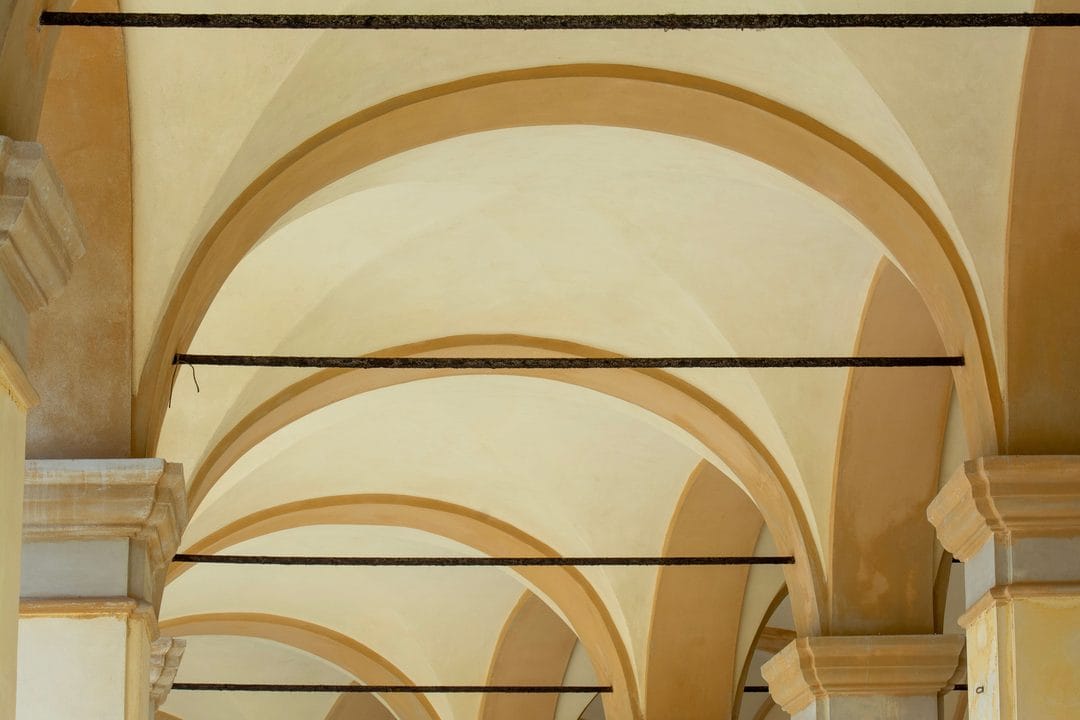
I got off the train at Bologna Centrale expecting a stopover — a place to change trains between Florence and Venice, maybe grab lunch. Three hours later I still hadn't left the station district, because I'd made the mistake of walking one block into Via dell'Indipendenza and getting swallowed by a portico that just kept going. Twenty minutes after that I was sitting alone at a marble-topped counter with a glass of Pignoletto and a plate of mortadella so different from the rubbery stuff sold as "bologna" back home that I actually laughed out loud. I cancelled the onward train. That was four days I hadn't planned for, and I've been telling women to steal a version of that mistake ever since.
The city that hides under a roof
Bologna's defining feature isn't a monument — it's the ceiling. The historic centre is threaded with roughly 40 kilometres of covered porticoes, arcades built from the 12th century onward when the university (founded in 1088, the oldest in the Western world) needed housing fast and builders solved it by pushing upper floors out over the street on stone columns. The longest stretch, the Portico di San Luca, runs 3.8 kilometres from the city gate up to the sanctuary on Colle della Guardia — 666 arches, if you're the sort of traveller who counts. For a solo woman, the practical effect matters more than the architecture lesson: you can cross most of the centre without stepping into direct sun, without getting caught in the sudden Emilia-Romagna downpours that hit even in July, and without ever walking down an unlit, empty stretch after dark. The porticoes are lived-in, not decorative — students cycling under them at midnight, shopkeepers rolling up shutters at seven, old men playing cards at a folding table outside a bar that's been open since the 1950s.
That constant low-level activity is the real safety feature, more than any checklist item. I walked back from dinner near Piazza Santo Stefano to my apartment off Via Zamboni close to 11pm on three separate nights and never once felt the prickle of "should I not be doing this." Florence and Venice, for all their beauty, empty out after the day-trip crowds leave; Bologna doesn't, because a huge share of the population is 19 to 25 and has nowhere better to be on a Tuesday night than a piazza with a €3 spritz.
Where the sauce you know isn't actually from here
Say "spaghetti bolognese" in Bologna and you'll get a polite, tired smile — it doesn't exist as a local dish. What exists is ragù alla bolognese, and it's served over tagliatelle, never spaghetti, because the flat ribbon shape holds the meat sauce in a way thin round pasta can't. Order it at a restaurant with a paper tablecloth and a menu only in Italian rather than one with photos out front; that's usually the tell for whether you're eating tourist-adjusted food or the real thing. Trattoria da Gianni in Via Clavature and Osteria dell'Orsa near the university are both places where I sat alone with a book and nobody blinked — solo diners are completely normal here, not a spectacle the way they can feel in more romance-marketed Italian cities.
Beyond the ragù, this is the city that gave the world tortellini in brodo (small pasta parcels in clear broth, traditionally the Christmas Eve dish but served year-round), real mortadella, Parmigiano-Reggiano from just south in the hills, and balsamic vinegar aged for decades in wooden barrels an hour away in Modena. The nickname La Grassa — "the fat one" — isn't self-deprecating, it's a badge. Skip the food tours that run €70-plus and instead book a single cooking class through a local host on a platform like Airbnb Experiences (around €55–65 for a small group session making tortellini by hand); you'll learn the actual pleating technique and eat everything you make.
Do not, under any circumstances, order a cappuccino after 11am at a sit-down restaurant and expect the waiter to hide his opinion of you. He won't.
A university town with its own rhythm
Via Zamboni is the spine of student Bologna, running from the two leaning towers — Le Due Torri, the taller of which, Torre degli Asinelli, you can climb for €5 and 498 steps — up toward Piazza Verdi, where on any given evening a few hundred students sit on the church steps with plastic cups of wine bought from a nearby alimentari for a couple of euros. It's loud, a little scruffy, covered in political graffiti and posters, and it's one of the easiest places in Italy to strike up a conversation as a solo traveller because approaching someone reading in a piazza doesn't read as strange when everyone around you is a stranger doing the same thing.
I'd recommend booking accommodation in this university quarter or just south of it near Piazza Maggiore rather than around the station — Via dell'Indipendenza itself is fine and central, but the streets immediately flanking Bologna Centrale get the usual transit-hub feel after dark that has nothing to do with the city's actual character. A well-reviewed B&B in the centro storico runs roughly €80–120 a night in shoulder season, which is meaningfully cheaper than equivalent Florence or Venice options fifteen minutes away by train.
Getting there and using it as a base
Bologna's genuine advantage over Florence is logistical: it sits on the high-speed Frecciarossa line, which makes it a genuinely useful base rather than a detour. Florence is 35–40 minutes away and costs around €15–25 one way if booked ahead; Venice is roughly 1 hour 20; Milan is under an hour. That means you can day-trip to any of them and come back to a city where dinner reservations aren't a competitive sport and a room costs two-thirds of what you'd pay sleeping in the places everyone else is racing to see.
- Modena — 25 minutes by train, home to real balsamic vinegar tastings and, if you book months ahead, Osteria Francescana
- Ravenna — 1 hour 10, Byzantine mosaics that predate anything in Venice by centuries and a fraction of the visitors
- Ferrara — 25 minutes, a walled Renaissance city built almost entirely for cycling, bikes rentable for around €10 a day
- And if you only have one afternoon free, the Portico di San Luca hike itself counts as a full outing — bring water, it's uphill the whole way
Where it isn't perfect
I won't oversell it. August in Bologna is genuinely rough — the university empties out, half the family-run restaurants shut for two or three weeks, and the heat sits in the porticoes with nowhere to go, since the same covered streets that shelter you from rain also block any breeze. If you're set on visiting in peak summer, go for the graffiti-covered energy of the university quarter in spring or the golden light in October instead, when the student population is back and the trattorie reopen their shutters. The city also isn't conventionally postcard-pretty the way Florence is — there's no equivalent of standing on the Ponte Vecchio at sunset — and if that's specifically what you're after, this isn't the trip that delivers it.
What it delivers instead is easier to describe than to photograph: four days of walking under the same arches locals have used for eight hundred years, eating food that hasn't been adjusted for anyone's expectations, and never once feeling like you were interrupting a city that would rather you weren't there.