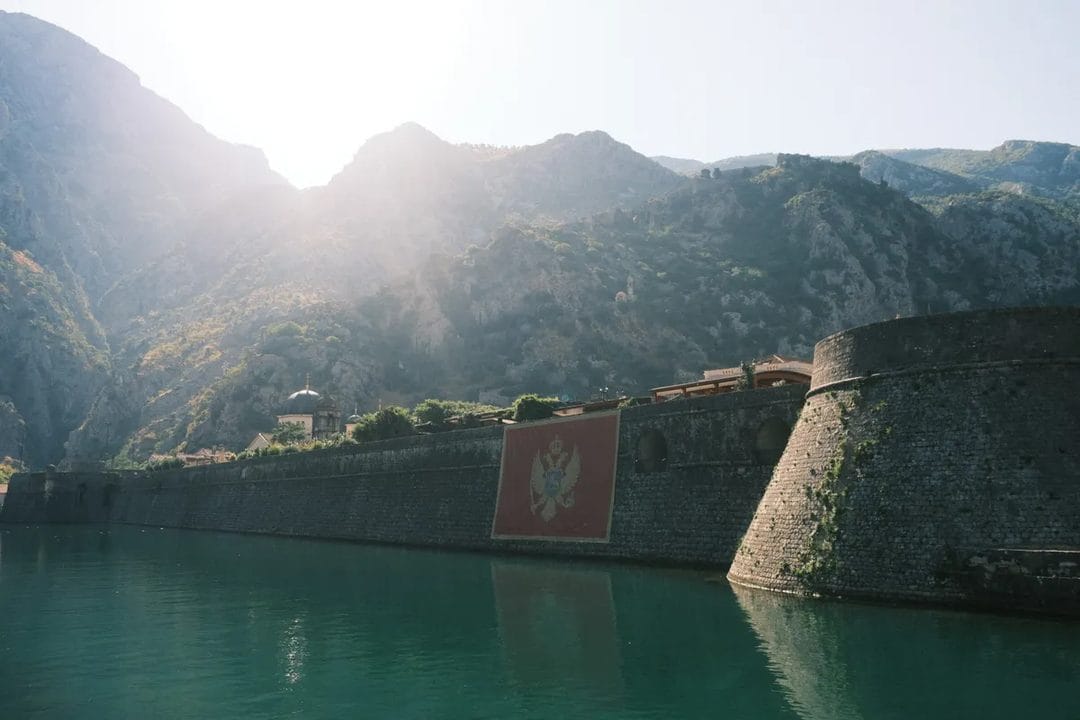
I landed at Tivat with a plan that lasted exactly eleven hours: two nights in Kotor, then the bus across the border to Dubrovnik for the part of the trip that actually mattered. By the second morning I'd cancelled the Dubrovnik half entirely, moved into a room two streets back from the cathedral, and started asking the guesthouse owner which bus went to Perast. Kotor does this to people. It looks, from outside the walls, like a warm-up act for Croatia — smaller, cheaper, less photographed — and then you spend three hours walking the same six hundred metres of old town because you keep finding another alley, another cat asleep on a windowsill, another view of the fortress wall climbing straight up the mountain behind the rooftops. I've done solo trips through a dozen coastal towns that oversell themselves. Kotor undersells itself, which after Bologna and Bergen felt like a genuinely rare thing to run into twice in one summer.
Getting There Without Flying Into Two Countries
Tivat Airport (TIV) is fifteen minutes from Kotor by taxi and gets direct seasonal flights from London, Manchester and a handful of other UK cities on Wizz Air and easyJet, usually £40–£90 return if you book more than six weeks out. The alternative — and the one most people default to without checking — is flying into Dubrovnik and taking the coastal bus down, which adds a border crossing, roughly two hours, and the kind of queue that eats your first afternoon if the crossing is busy with cruise-ship transfers. Fly into Tivat if the dates line up. It's the better choice, not a slightly-better-but-more-obscure one.
From Tivat Airport, a taxi into Kotor runs €15–€20 if you agree the price before getting in — meters are inconsistent and drivers know it. The local bus is cheaper at around €2 but only runs a handful of times a day, so check the timetable before you land rather than after.
The Old Town Is Smaller Than You Think — Budget Four Nights, Not Two
Kotor's walled old town covers less ground than most people expect from the photos, which is exactly why the two-night itinerary fails. You'll "finish" the old town by lunch on day one and then spend the rest of your stay deciding it deserves a slower pace than you gave it credit for. A private room inside or just outside the walls runs €35–€55 a night in shoulder season (May, June, September), climbing to €70+ in July and August when cruise ships stack up in the bay. Dorm beds at the handful of well-reviewed hostels sit around €15–€20. I paid €42 a night for a small room with a shared terrace two minutes from the Sea Gate, which is the kind of price that doesn't exist in Dubrovnik's old town at any time of year. The owner left a bottle of local wine on the table the first night without being asked, which is a small thing, but it's the sort of small thing that doesn't happen once a town gets fully accustomed to cruise-ship turnover. Book directly through the guesthouse rather than a booking platform if you can find contact details — several places here still quietly knock ten percent off for it.
Stay inside the walls if you can afford the difference. It sounds like a minor upgrade until you're the only person left in the square after the day-trip crowds bus back to their cruise ships around five, and the whole town quietly becomes yours for the evening.
The Climb to San Giovanni Fortress Beats Every View I Found in Montenegro
The view from the top is the Bay of Kotor doing its best impression of a fjord, with the old town's terracotta roofs directly below and the mountains folding into the water on both sides.
The fortress walls climb the mountainside behind the old town in a zigzag of roughly 1,350 steps, and the entrance fee is €8, paid at a gate near St. John's church on the eastern edge of the walls. Go at seven in the morning, not for the light — though the light is good — but because the climb has almost no shade and by ten the stone holds heat like a radiator. I did it at eight and still finished the top third in direct sun, drenched, passing two separate tour groups who'd clearly been told the wrong start time. Bring more water than feels necessary and proper shoes — the steps are uneven limestone worn smooth in places, and I watched more than one person in flip-flops turn back at the halfway ruin.
Perast and the Church on the Water Make the Best Half-Day Out
Perast sits twenty minutes up the bay by local bus (the Kotor–Herceg Novi Blue Line, around €2, departing roughly hourly from the main bus station) and is where you take the short boat ride to Our Lady of the Rocks, an artificial islet with a Baroque church that fishermen apparently built up stone by stone over centuries, one boatload at a time, until it became solid ground. Shared boats run continuously from the Perast waterfront for about €5 return; private water taxis will quote you €20–€25 if you don't ask around first. The church interior is small — you're in and out in fifteen minutes — but the walk along Perast's waterfront afterward, past crumbling Baroque palazzi that nobody's bothered to restore into boutique hotels yet, is worth the trip on its own.
Don't do Perast as a rushed stopover between two other plans. It rewards the version of the day where you have nowhere else to be.
Eating Alone Here Isn't Awkward — It's Barely Noticed
Kotor's old town runs on tourism, which means solo diners are unremarkable rather than a curiosity the staff feel obliged to comment on. A plate of njeguški pršut and local cheese with a glass of vranac runs €8–€12 at most konobas (family-run taverns) just off the main squares, and a full seafood dinner with wine lands around €20–€25 — noticeably below Dubrovnik prices for comparable quality, sometimes better quality, since Kotor hasn't yet been fully reoriented around cruise-ship turnover. Nobody asks if you're waiting for someone, nobody hovers with a second menu, and the smaller konobas tend to seat solo diners at the good tables rather than the ones by the kitchen door — the opposite of what happens in most cities I've eaten alone in. I ate at the same small konoba three nights running, not because I ran out of options but because the owner remembered my order by the second night, which is its own kind of company when you're travelling alone. None of the three places I tried asked for a reservation, even on a Friday night in July when every outdoor table in the old town was full. Breakfast is the one meal worth skipping the restaurant for: a burek from any bakery near the Sea Gate, eaten standing up on the walk to the fortress, costs about €2 and beats anything sit-down you'll find before ten.
What Solo Women Should Actually Know
Montenegro ranks consistently as one of the safer Balkan destinations for women travelling alone, and Kotor's old town in particular is walkable at night without the wariness you'd want in a larger city — it's small, well-lit near the main squares, and the walls mean there's genuinely nowhere for the town to sprawl into somewhere less watched. The one real friction point is taxis: agree the fare before you get in, every time, or ask your accommodation to call a driver they trust. I had one driver from the bus station try to double the going rate on my first night before I'd learned the local price, and backed out and walked instead — the old town is small enough that walking is almost always an option anyway.
A few practical notes that don't fit anywhere else, in no particular order:
- Carry small euro notes — many konobas and the fortress ticket booth don't reliably break €50s.
- The old town's stone streets are brutal on trainers with worn soles; pack shoes with actual grip.
- Montenegro uses the euro despite not being in the EU or the Eurozone, so no currency exchange hassle if you're coming from elsewhere in Europe.
- July and August bring cruise-ship crowds that thin out completely by early evening — plan fortress climbs and photos around that rhythm, not against it, and there are others worth building an itinerary around too.
Four nights was the right amount of time, and I say that as someone who normally prefers moving on every two or three days. Kotor is the rare stop on a Balkan route that's worth slowing down for rather than ticking off on the way to somewhere with a bigger name.