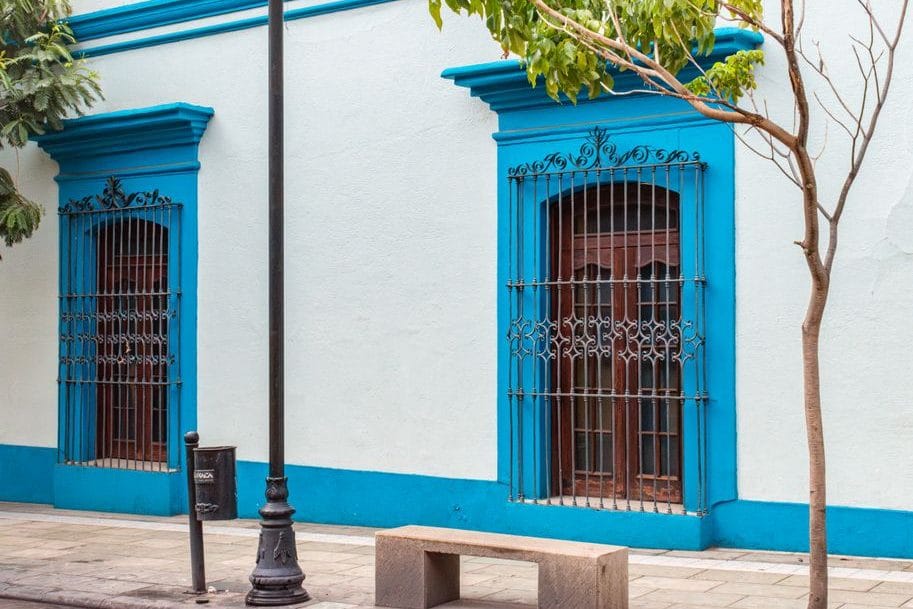
I got lost on my second morning in Oaxaca looking for coffee, took a wrong turn off Calle Alcalá, and ended up standing in front of a wall painted floor to ceiling in cobalt blue, with a woman selling tlayudas out of a cart who waved me over before I'd even asked for directions. That's the thing nobody tells you about Oaxaca de Juárez before you go: you don't really need a plan here, because the city keeps handing you a better one than the itinerary you packed.
Why Oaxaca, and why solo
Oaxaca gets compared to Mexico City constantly, usually as the smaller, calmer, more walkable alternative — and that reputation is accurate, but it undersells the place. The historic center is roughly twenty square blocks, almost entirely walkable, anchored by the Zócalo on one end and the Templo de Santo Domingo de Guzmán on the other, and unlike CDMX you can cover most of what matters on foot in a single day without touching a metro map. For a first solo trip to Mexico, that geography does a lot of the safety work for you before you've made a single decision.
I'd traveled solo through Southeast Asia and most of Western Europe before I got to Oaxaca, and it still surprised me. The city runs on a rhythm that rewards being alone rather than tolerating it — mezcalerías with bar seating built for one, market stalls where a solo diner gets the same warmth as a table of six, courtyard cafés where nobody blinks at a woman reading with a coffee for two hours. Recommend it without hedging: if you're weighing Oaxaca against Puerto Vallarta or Playa del Carmen for a first Mexico trip alone, take Oaxaca. It has more to actually do during daylight hours, and the tourist infrastructure around solo women specifically — hostels, walking-tour groups, cooking classes built for single sign-ups — is more developed than either coastal option. Part of that comes down to who's already going: Oaxaca has been a fixture on the slow-travel and food-tourism circuit for over a decade, long enough that hostel owners, tour operators, and even taxi dispatchers have gotten used to women arriving alone and staying a week or two. You notice it in small ways — a cooking class instructor who assumes you want the market tour included rather than asking if you're "sure" you can handle it solo, a hostel front desk that hands you a laminated map with the safe-late-night streets already circled without you bringing it up. None of that replaces basic street sense, but it does mean you're not the first solo woman the city has figured out how to host.
Where to stay if you're on your own
Centro Histórico is the obvious base, and for a first visit it's the right one — everything from Santo Domingo to the main market district sits within fifteen minutes on foot, and you're never far from a lit street or an open restaurant after dark. Casa Angel Youth Hostel, just off Calle García Vigil, runs dorm beds for roughly 300–450 MXN a night ($15–23) and has a rooftop that turns into an informal meetup spot most evenings — I met two other solo travelers there on night one and we ended up sharing a cab to Hierve el Agua three days later. If you want a private room without hostel noise, El Diablo y la Sandía is a small boutique hotel a few blocks from the Zócalo with rooms running 1,400–2,200 MXN ($70–110), decorated in the kind of maximalist Oaxacan textile style you'll want photos of regardless of whether you're staying there.
Jalatlaco, a fifteen-minute walk east of the center, is the neighborhood I'd actually pick for a second trip — cobblestone streets, fewer tour groups, a genuinely good coffee scene around Café Brújula, and it's quiet enough at night that you'll want a cab back rather than a walk once the sun's down. That's the trade-off worth naming honestly: Jalatlaco is prettier and calmer during the day, but it thins out fast after 9pm in a way Centro doesn't, so budget 60–90 MXN for an Uber back rather than testing how far your comfort with dark side streets actually goes.
Getting around without overthinking it
Uber works reliably in Oaxaca city and is the move after dark, full stop — it's cheap enough that there's no real argument for walking a questionable street to save 50 pesos, and the app gives you a driver name, plate, and route to text a friend before you get in. During the day, walking covers almost everything in Centro and Jalatlaco. For anything outside the city — Hierve el Agua, Monte Albán, San Agustín Etla — you're choosing between a shared colectivo, a private driver, or a group tour, and which one makes sense depends entirely on how much you want to talk to strangers that day.
Eating alone, properly
Mercado 20 de Noviembre is where you should eat at least one meal, ideally lunch when the comedor stalls are at full volume — point at what looks good, sit at the counter, and expect a full plate of tasajo or cecina with tortillas, salsa, and a fresh-squeezed juice for around 80–120 MXN. It's louder and more chaotic than a restaurant, which paradoxically makes it easier to eat alone in: nobody's watching a solo diner in a room where everyone's shouting orders. Mercado Benito Juárez next door is smaller and better for grazing — chapulines, quesillo, mezcal by the shot from stalls that will let you taste before you buy.
For a sit-down dinner, Casa Oaxaca and Los Danzantes both do the elevated end of Oaxacan cuisine — moles built from ingredients that take days, not hours — and both seat solo diners at the bar without ceremony, which matters more than it sounds like it should when you've spent three nights in a row eating standing up at a market stall. Criollo, chef Rosalinda Guillén's restaurant, is pricier (tasting menus run 900–1,400 MXN) but it's the meal I'd tell a friend not to skip if the budget allows even one splurge night. And for mezcal specifically: skip the tourist-trap tasting bars on the main plaza and go to In Situ Mezcalería on Morelos instead, where the staff will walk you through espadín versus tobalá versus tepeztate without the performance, for roughly 90–150 MXN a pour.
Santo Domingo and the center, slowly
The Templo de Santo Domingo de Guzmán deserves an unhurried morning rather than the twenty-minute drive-by most itineraries give it — the gilded interior alone is worth the visit, but the attached Museo de las Culturas de Oaxaca and its botanical garden behind the church are where you actually understand the region, from pre-Hispanic Zapotec goldwork to the ethnobotany of mezcal agave. Entry to the museum runs about 85 MXN, and going right when it opens at 10am means you'll mostly have the cloisters to yourself.
Down toward the Zócalo, the pace changes entirely — this is the plaza where the city actually lives, with shoeshine stands, marimba trios in the evening, and vendors selling everything from woven palm hats to fresh nieves (Oaxacan sorbet, and the tuna — prickly pear — flavor is worth seeking out specifically). Sit at one of the cafés under the arcade with a coffee for an hour and you'll watch more of daily Oaxacan life than any guided tour would show you, though I'll admit the mezcal-sampling street vendors circling the plaza get repetitive fast if you've already said no twice.
Day trips that actually earn the trip out
Hierve el Agua — the petrified waterfall formations about an hour and a half outside the city — gets photographed to death on Instagram, and it still delivers in person, especially if you go early to beat the tour buses from the coast. A shared colectivo from the second-class bus station runs roughly 100–150 MXN each way; a private driver for the round trip with a stop at a mezcal distillery in Mitla or Teotitlán del Valle along the way costs more like 600–900 MXN, split easily if you team up with other solo travelers from your hostel.
Monte Albán, the Zapotec archaeological site on a flattened mountaintop fifteen minutes from downtown, is the easier half-day option — colectivos leave regularly from Calle Mina, entry is 90 MXN, and you'll want at least two hours to walk the full plaza and climb the platforms. Less crowded and, for my money, more interesting: San Agustín Etla, a small town forty minutes north where the old textile factory has been converted into the Centro de las Artes San Agustín, a contemporary art and papermaking space set against pine-covered hills. It's the kind of place a solo afternoon is genuinely built for — nobody's rushing you through, and the walk from the colectivo drop-off into town takes you past the kind of unremarkable, real Oaxaca that doesn't make it into the guidebooks.
Money and the practical stuff
Cash is still the default for markets, colectivos, and small mezcalerías, even though hotels and the nicer restaurants take cards without issue. Withdraw from ATMs attached to actual banks — BanBajío and Santander branches around the Zócalo are reliable — rather than the standalone machines scattered through tourist areas, which carry steeper fees and, occasionally, worse exchange rates. Budget roughly 900–1,300 MXN a day ($45–65) for a mid-range solo trip covering a private room, two proper meals, one mezcal stop, and local transport, which is noticeably cheaper than an equivalent week in Mexico City's Roma or Condesa neighborhoods.
On safety specifically, since it's the first question every solo female traveler asks before booking: Oaxaca's historic center is genuinely one of the more comfortable Mexican cities to walk alone after dark, provided you stick to the well-lit blocks between the Zócalo and Santo Domingo. That said, don't let the calm center fool you into skipping the basics you'd apply anywhere else — share your location with someone at home, take an Uber rather than walk after 10pm even on streets that look fine, and keep your phone in a zipped bag rather than a back pocket at the markets, where pickpocketing is the actual risk, not anything more dramatic. Every solo traveler I met in three separate hostels described the same thing: more unsolicited kindness from strangers than caution ever turned out to require. One woman I met at Casa Angel got walked two full blocks out of her way by a taco stand owner who noticed she looked lost near the second-class bus terminal, no charge and no expectation attached. Local buses and unmarked taxis are the one thing worth actually avoiding as a rule — stick to Uber or a hotel-arranged driver for anything after dark, since unmarked cabs aren't metered and price disputes with a driver who doesn't speak much English are a bad way to end a night. Solo female travel forums love to pass around worst-case stories from Mexico's border cities and cartel-affected states, and it's worth saying plainly that none of that maps onto Oaxaca de Juárez, which sees a fraction of the violent crime reported in those regions and draws its safety reputation from the tourism economy actively protecting it.
What stuck with me longest wasn't Santo Domingo's gold leaf or the view from Monte Albán — it was the woman at the tlayuda cart on my second morning, who found out I was traveling alone and spent the next ten minutes drawing a map on a paper napkin of every market stall her sister-in-law ran, refusing to let me pay for the extra salsa she added "for the walk." Pack light, book the dorm bed at Casa Angel for at least the first two nights, and let the wrong turns happen. In Oaxaca, they're usually the itinerary.