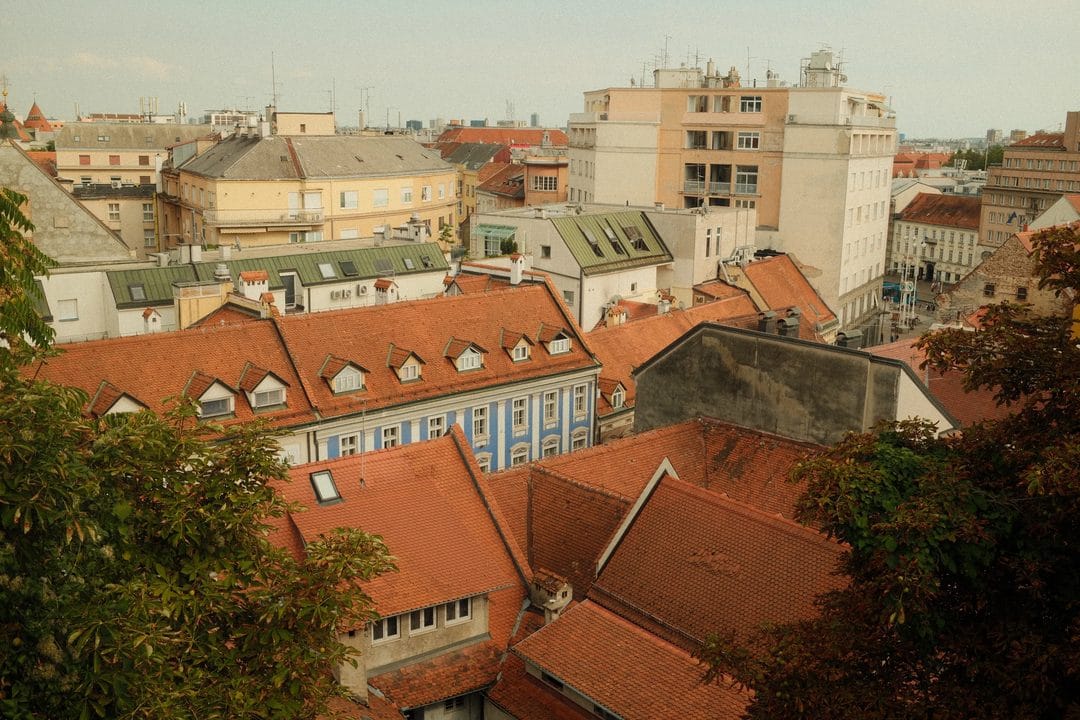
I'd booked Zagreb as a layover, not a destination. Two nights before catching a train down to Split, purely because the flight connection worked out cheaper that way. I left five days later, having rebooked my onward train twice, and I still think about the bakery three doors down from my apartment more than I think about almost anywhere else I've traveled solo this year.
Everyone going to Croatia goes to the coast. Dubrovnik, Split, Hvar — the entire tourism machine points south, toward the water, and Zagreb gets treated as a logistical necessity you pass through on the way to somewhere prettier. That's exactly why it works as a solo trip: it's a genuine European capital, cheaper than almost anywhere on the coast in August, with none of the cruise-ship crowd and none of the "everyone's on a group trip except you" energy that can make solo travel on the Dalmatian coast feel lonelier than it should.
Getting Your Bearings in the Upper Town
Zagreb splits cleanly into Gornji Grad (Upper Town) and Donji Grad (Lower Town), and almost everything worth seeing on foot sits in or near the Upper Town. The Zagreb Funicular connects the two — it's 66 meters long, making it one of the shortest funiculars in the world, and it's been running since 1890 with only a handful of interruptions since. The ride costs roughly €1 and takes about 60 seconds, which tells you something about the scale of this city: it's compact enough that you can walk the whole thing in a day, but layered enough that a day doesn't feel rushed.
St. Mark's Church, with its tiled roof showing the coats of arms of Croatia, Dalmatia, Slavonia, and the city of Zagreb, sits at the top and photographs better in the late afternoon light than it does at midday — worth timing your visit for around 5 p.m. if you want the shot without fighting the tour groups that cluster there before lunch. From there, Strossmayer Promenade runs along the old city walls and gives you the best free view in Zagreb, looking out over the rooftops of the Lower Town toward the cathedral spires.
The Museum That Actually Earns the Hype
The Museum of Broken Relationships gets recommended in every single Zagreb guide, and it's rare that something gets that consistently recommended and still delivers. It's a small museum built entirely around donated objects from failed relationships, each with a handwritten note explaining what it meant and why it ended — a prosthetic leg, a toaster, a garden gnome, a wedding dress cut into pieces — and it manages to be genuinely moving rather than gimmicky. Entry runs around €9, and you'll want 45 minutes to an hour, less if you're rushing, more if you read every card, which I'd recommend doing.
Skip the Zagreb City Museum unless you're specifically interested in the detailed civic history — it's competently done but forgettable next to the Broken Relationships museum and the Mimara, which houses an genuinely excellent private art collection spanning Egyptian antiquities through Impressionist painting for around €7 entry.
Where the City Actually Lives
Dolac Market sits just above the main square and runs every morning — vendors selling produce, cheese, honey, and flowers from stalls with red umbrellas that have become one of the unofficial symbols of the city. Go before 10 a.m. for the best selection and the least crowding, and budget €5-€8 for a bag of fruit, some local cheese, and something to eat on a bench afterward. It's not a tourist market dressed up for visitors; it's where actual Zagreb residents do their weekly shopping, and the difference shows in the prices and the produce quality both.
Tkalčićeva Street is where the evening happens — a pedestrian street lined with cafes and bars that fills up from around 6 p.m. onward, loud enough to feel social but not so loud that sitting alone with a book feels conspicuous. A coffee runs €2-€2.50 almost anywhere in the city, and a glass of Croatian wine at one of the Tkalčićeva bars typically costs €4-€6, noticeably cheaper than what you'd pay for the same glass on Hvar in peak season.
Solo Dinner Without the Awkwardness
Restoran Purger and La Struk both handle solo diners well — the second specializes in štrukli, a baked cheese pastry that's the closest thing Zagreb has to a signature dish, and a full portion with a side runs around €8-€10. Neither restaurant makes a solo table feel like an afterthought, which isn't universal in this city; a couple of the more formal restaurants near Ban Jelačić Square are clearly set up for groups and couples, and I'd steer around those specifically if you're eating alone and want to actually enjoy it rather than feel like you're occupying a table built for four.
Money and the Practical Stuff
Croatia adopted the euro in January 2023, which simplifies things if you're coming from elsewhere in the eurozone and removes one more layer of currency math a solo traveler has to manage. A budget of €50-€70 a day covers a mid-range hostel or budget guesthouse (€20-€30 a night), meals, museum entries, and a coffee or two, without pushing into backpacker-austerity territory. Hostels around the main square and toward the Upper Town run safer and quieter than the handful clustered near the train station, which back up against a slightly rougher stretch after dark — not dangerous exactly, just not where I'd want to be walking back to alone at midnight.
Zagreb reads as one of the more comfortable solo-female-travel cities in Central Europe: well-lit streets in the tourist core, a genuinely reliable tram system if your feet give out, and a level of English fluency among people under 40 that makes asking directions or ordering food low-stress even without any Croatian.
The Day Trip Everyone Actually Takes
Plitvice Lakes National Park sits about two hours south by bus, and it's the one place where Zagreb genuinely overlaps with the tourist trail the coast usually absorbs. Buses run regularly from the main bus station, cost around €12-€15 each way, and the park entry itself runs €25-€40 depending on season — steep for a day trip, but the boardwalks over turquoise, waterfall-fed lakes are the kind of thing photos genuinely undersell. Go on a weekday if your schedule allows it; weekend crowds turn the boardwalks into a slow shuffle rather than a walk.
Three days is enough for Zagreb itself, plus the Plitvice day trip, without ever feeling like you're padding the schedule to justify the flight. That was the plan when I booked the layover, and then somehow it stretched to five, mostly because of a bakery on Radićeva street that I never found the name of and have failed to relocate on every map since. Some places do that. Zagreb, unfairly overlooked in favor of the coast, is apparently one of them.