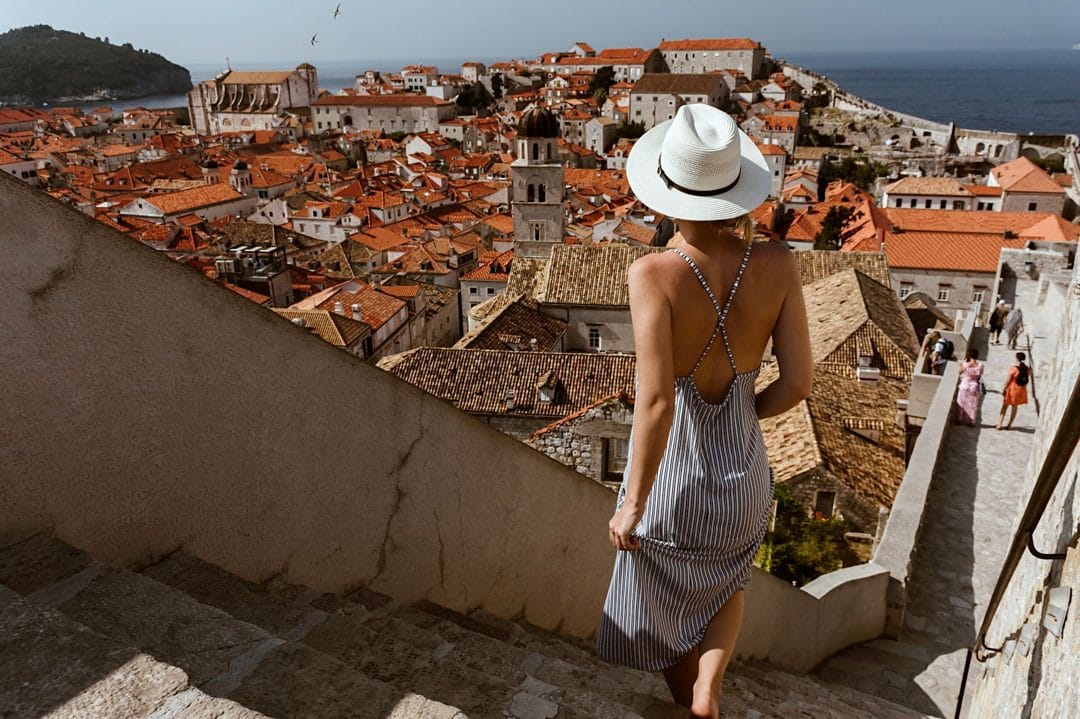
The first time the heat genuinely scared me, I was standing on a tram platform in Seville at half past three in the afternoon, watching the temperature display on a pharmacy sign tick up to 44C. Not a dramatic figure pulled from a headline. The actual number, blinking in green, two streets from my hotel. I had a museum ticket for four o'clock and absolutely no intention of using it.
That trip rearranged how I think about summer travel in this part of the world. For years the advice handed to women planning a solo or group trip through Spain, Italy, Greece or southern France was about pickpockets and dodgy taxis and which neighbourhoods to avoid after dark. All still worth knowing. But the thing most likely to flatten your trip now isn't a stranger — it's the weather. Southern Europe has had a string of brutal summers, and the European Environment Agency has been blunt that heatwaves on the continent are getting longer and hotter, not milder. Plan as if it will be hot, because it will be.
Stop fighting the clock — the locals already gave up
Here is the single most useful mental shift: copy what the people who live there actually do, not what the guidebook timetable suggests. In Andalusia, in Sicily, across much of inland Portugal and Greece, the middle of the day belongs to no one. Shops shutter from roughly 2pm to 5pm or later. Streets empty. This isn't laziness or a quaint tradition for tourists to photograph — it's a sensible response to a sun that can put you in A&E.
So build your day around two windows. Be out and moving before 11am, when the cathedral courtyards and market stalls are still bearable and the light is gorgeous for photos anyway. Then disappear. Lunch slowly, nap, sit in a cool church, read in your room with the shutters closed. Come back out around 6 or 7pm when the city exhales and the streets fill with families and the temperature finally drops below something humane. Plenty of restaurants in Spain don't even start serving dinner until 8.30 or 9, so you're not missing anything — you're just on the right schedule.
The trips that fall apart are the ones where people try to do a packed itinerary at noon because that's the only time the coach tour runs. You'll be miserable, you'll be queuing in full sun, and you'll spend the evening recovering instead of enjoying the best part of the day.
What actually keeps you cool (and what's just marketing)
Skip the gimmicks. You don't need a battery-powered neck fan that dies in an hour. A few unglamorous things do most of the work, and they cost very little.
- A wide-brimmed hat with an actual brim, not a baseball cap that leaves your ears and neck exposed. Decathlon sells perfectly good ones for around 8 euros.
- A small refillable bottle and the discipline to keep filling it. Many Italian cities have public drinking fountains — Rome's nasoni run cold, free water all day, and a tap app maps them. Don't pay 3 euros for plastic bottles you could fill for nothing.
- A light linen or loose cotton long-sleeve. Counterintuitive, but covering your arms in pale, breathable fabric beats bare skin frying, which is exactly why people in genuinely hot countries cover up rather than strip off.
- Electrolyte sachets — the rehydration kind from any farmacia, not sugary sports drinks. When you've sweated through a morning, plain water alone can leave you headachey and wobbly.
- A small folding fan. Unfashionable, devastatingly effective, and you'll see Spanish grandmothers wielding them like weapons. Follow their lead, among other small habits worth stealing.
One thing worth spending real money on: accommodation with proper air conditioning, confirmed in writing before you book. "Air conditioning" on a listing can mean a single wheezing unit in the living room of a four-bed apartment, or a fan the host generously relabelled. Message and ask directly whether the bedroom you'll actually sleep in has working AC. A bad night's sleep at 30C compounds across a week into genuine exhaustion, and that's when judgement slips and small risks turn into real ones.
The safety angle nobody frames as safety
Heat is a women's-travel safety issue, even though it rarely gets filed under that heading. Heat exhaustion makes you slow, foggy and physically weaker — exactly the state you don't want to be in alone in an unfamiliar city. Dehydration affects your decision-making before you notice it's happening. The classic story isn't dramatic: someone skips lunch, walks too far in the sun, feels faint on a quiet street, and suddenly a perfectly manageable situation feels frightening because their body has stopped cooperating.
So treat hydration and rest as part of staying safe, not as optional comfort. If you're travelling in a group, make a quiet pact to watch each other for the early signs — a thumping headache, going quiet, stopping sweating, getting irritable. Those are the warnings, and the person experiencing them is often the last to clock what's going on. (I once spent twenty minutes insisting I was "fine, just tired" before a friend marched me into an air-conditioned café and ordered me two glasses of water. She was right. I was not fine.)
If you're solo, the equivalent is having a rough check-in rhythm with someone at home and not pushing through warning signs to tick off one more sight. No ruin, no rooftop bar, no perfect sunset photo is worth heatstroke in a country where you may not speak the language well enough to explain what's wrong.
Pick destinations that work in July, not against it
Some places are simply more bearable in peak summer than others, and being honest about that beats romanticising a city that becomes an oven. The coast, obviously, gets the sea breeze — San Sebastián in the Basque Country stays markedly cooler and greener than Seville, and the food is arguably better anyway. The Atlantic side of Portugal, places like Porto or the Costa Vicentina, dodges the worst of the inland furnace that bakes the Algarve's interior.
Altitude is your other friend. The Italian Dolomites, the Spanish Pyrenees, the mountain villages of mainland Greece — all noticeably cooler, often by ten degrees or more, and gloriously uncrowded compared with the coastal honeypots. A summer trip doesn't have to mean a beach and a sunburn. Some of the best women's group trips I've heard of in the last couple of years were hiking weeks in the mountains, precisely because everyone was sick of melting at sea level.
That said, if your heart is set on Rome, Florence, Athens or Seville in July, go — just go with the heat plan above and zero guilt about napping through the afternoon. These cities are extraordinary, and millions of people visit them in summer without incident. The point isn't to scare you off. It's to stop you arriving with a packed 10am-to-6pm itinerary that the climate will demolish by day two.
A few hard rules I no longer break
Some of this I learned the easy way, by watching sensible locals; some of it the hard way, by ignoring my own body. Either way, these stay non-negotiable now.
Never start a long walking day without breakfast and a full bottle of water — your body needs fuel and fluid loaded before the heat starts pulling it back out. Always carry a paper map or an offline map, because a phone that overheats in 40C sun will shut itself down precisely when you need it, and a dead phone in an unfamiliar city is its own small crisis. And book the indoor, air-conditioned highlight — the gallery, the food market, the hammam — for the worst heat of the afternoon, so the hours you'd otherwise waste hiding become the best part of the day.
The romance of a sun-drenched European summer is real. I'm not immune to it; I still book these trips every year. But the version that actually works is slower, earlier, better hydrated and a great deal more horizontal in the afternoons than the postcard suggests. Plan for the heat, and Southern Europe in summer is still one of the finest things you can do with a few weeks and a bit of nerve. Pretend the heat isn't there, and it will run your trip for you.